
For people who are hard of hearing, everyday conversations can present challenges that others rarely have to consider; a casual exchange with a friend, a discussion across a table, or a conversation in a public space can become difficult when spoken words are hard to follow. While speech recognition technology has made real-time transcription increasingly accessible, reliable tools for Hebrew speakers still face practical limitations.
Arbel, a student and independent developer from Israel, is working to address that gap through Ozen, a free, open-source application that provides live Hebrew captions for face-to-face conversations. Designed to work entirely on a smartphone without an internet connection or account, the app aims to make spoken communication more accessible while keeping conversations private. To support the development and training of Ozen’s speech recognition models, Arbel turned to Xesktop for access to more powerful GPU hardware.
Building technology around everyday needs
Arbel’s journey into application development began with a simple motivation: creating tools that people could find genuinely useful.
“I started building apps because I wanted to make things that actually help people day-to-day.” – Arbel, developer of Ozen.
As an independent developer, Arbel works across the different stages of application development, from understanding user needs to building, testing, and improving the software. His approach is grounded in the belief that the value of technology comes from how well it addresses a real problem.
Ozen: Making spoken Hebrew easier to follow
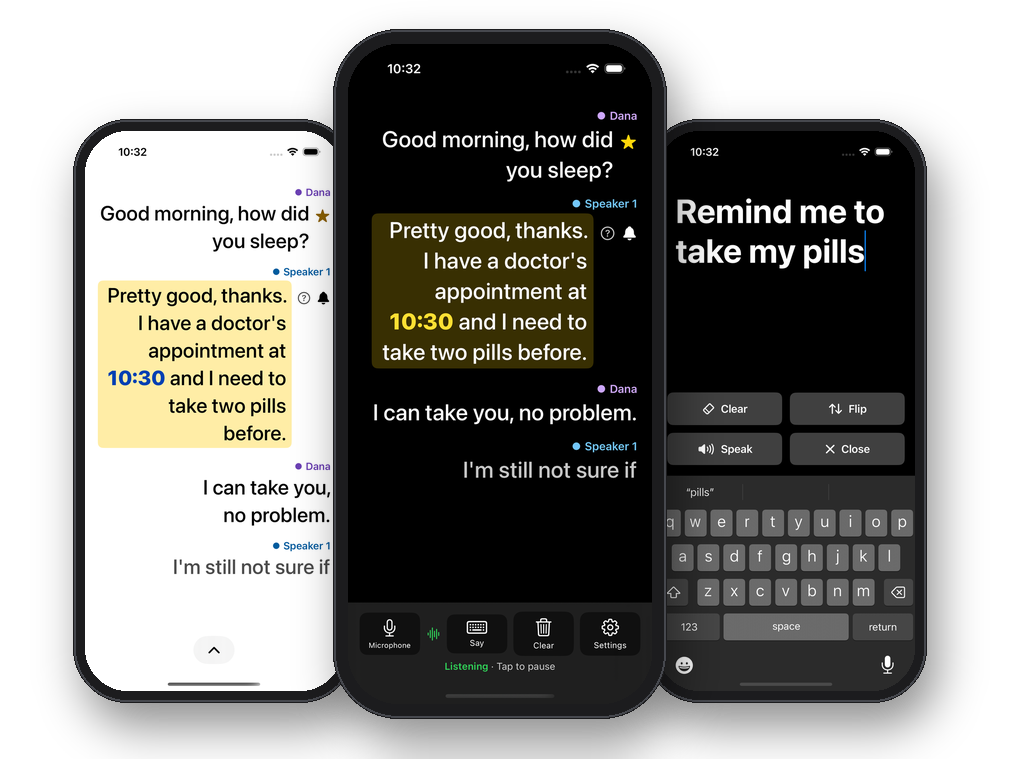
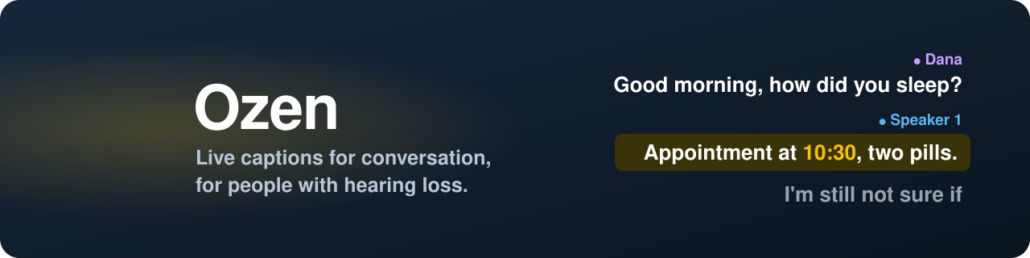
Ozen is built around a focused idea: converting spoken Hebrew into readable captions as a conversation happens. The application is designed for people who are hard of hearing, allowing them to follow face-to-face conversations through live transcription. Its defining feature is that speech recognition runs locally on the user’s device, rather than requiring audio to be sent to a remote server. Arbel explains the motivation behind that decision:
“Face-to-face conversation is where hard-of-hearing people struggle most, and existing tools need internet and accounts. I wanted live Hebrew captions that run fully on-device: private, offline, free, no account needed.” – Arbel
Ozen is also open source, with its code made publicly available under the AGPLv3 license. This reflects Arbel’s interest in building accessible tools that can remain available beyond a conventional paid software model. Although the application has a relatively simple goal from the user’s perspective, achieving it requires careful decisions about speech recognition models, computational performance, and the accuracy of Hebrew transcription.
Teaching a model to understand real conversations
One of Ozen’s central development challenges is ensuring that the application can recognize spoken Hebrew accurately across different speakers and speaking styles. Human speech varies considerably. People speak at different speeds, pronounce words differently, and use accents that can affect how a speech recognition model interprets what it hears. These variations are important for an application designed to support real conversations, so Arbel identifies this as the most difficult part of the project.
“Biggest challenge: Hebrew speech-recognition accuracy on a phone with limited compute. Diverse voices and accents are hard. And also not a lot of datasets to use.” – Arbel
To support Ozen’s development, open Hebrew datasets and models from ivrit.ai are used. These resources provide a foundation for experimenting with Hebrew transcription and improving the application’s speech recognition capabilities. They also highlight the importance of openly available language resources, particularly for independent developers who do not have access to large proprietary datasets.
Making speech recognition work on a phone
Larger speech recognition models can require substantial processing power and memory. Smartphones have different hardware constraints from desktop workstations and dedicated GPU servers, which makes running demanding models locally a more complicated task.
Arbel needs to develop and evaluate models that can recognize Hebrew accurately while keeping the application’s offline functionality practical. But the part of development he enjoys most is also the clearest reminder of why this technical work matters: seeing the application caption an actual conversation.
Building a workflow for mobile and server-based speech recognition
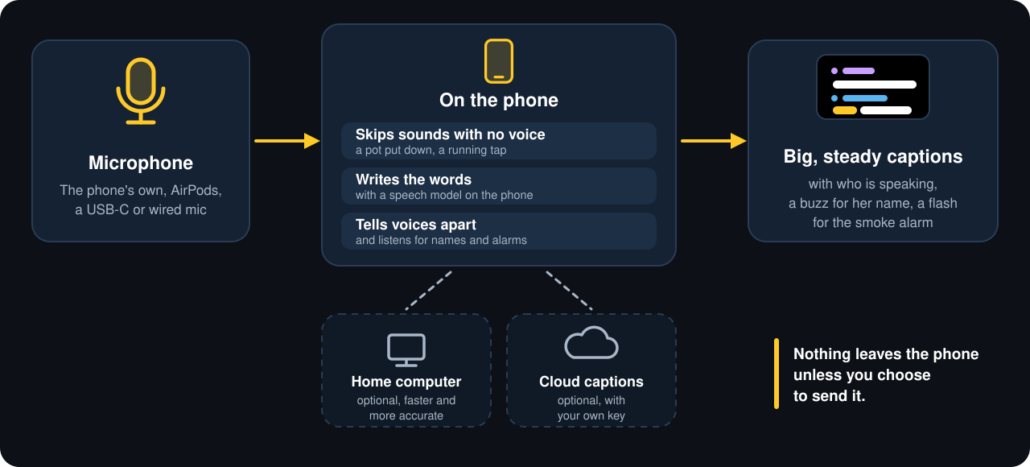
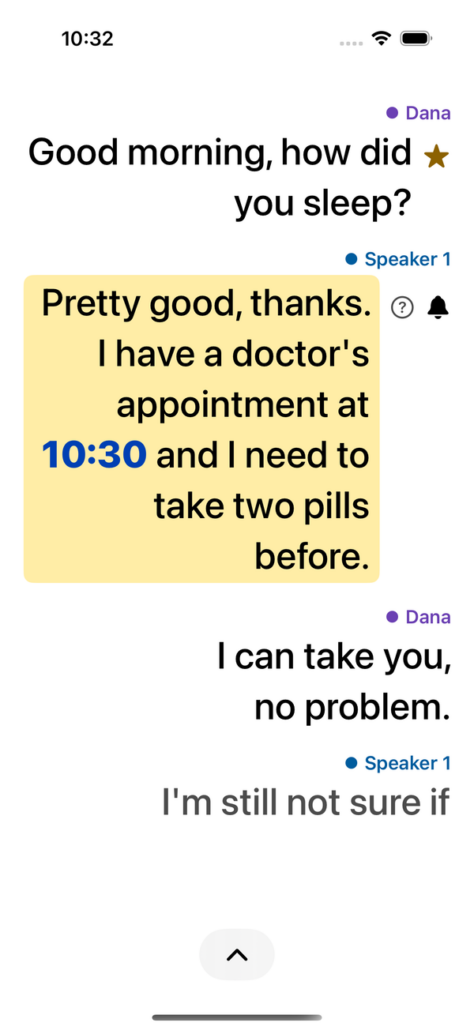
The workflow is designed to keep speech recognition accessible while giving users flexibility in how their audio is processed. Ozen captures speech through the phone’s microphone or a connected device, then uses an on-device speech model to transcribe spoken words while filtering out sounds without speech. It can also distinguish between speakers and recognize important sounds, such as names being called or alarms, before displaying the information as large, readable captions. For users who need greater transcription accuracy, optional processing through a home computer or cloud service provides additional flexibility. Privacy remains an important consideration, with audio and transcription data staying on the phone unless the user chooses to send them elsewhere.
Ozen’s development combines testing on physical mobile hardware with more computationally demanding work on a separate machine. Arbel uses his own phone to test the on-device experience. This allows him to evaluate how the application performs in the environment where people are expected to use it. GitHub supports his development workflow, while ivrit.ai provides access to Hebrew speech resources. For the more demanding server-side work, he uses Python, CTranslate2, and CUDA. The project also includes an optional home-server component that runs a full-size Hebrew Whisper model for higher transcription accuracy.
When local GPU hardware reaches its limits
Before using rented GPU resources, Arbel relied on an NVIDIA RTX 2080 Ti for GPU-intensive development. With 11 GB of VRAM, the graphics card was useful for some work but became a limitation when he needed to handle the heavier demands of full-size Whisper models.
“Before renting GPU time I worked with an RTX 2080 Ti I had, but I kept hitting its limits. 11GB of VRAM and clock speed held back the heavier jobs, so developing and benchmarking the full-size Whisper models was slow and constrained.” – Arbel
These limitations affected the development process in different ways.GPU memory determines how much model data can be handled during computation, while processing speed affects how quickly experiments can be completed and evaluated. Limited memory may require additional optimization or more capable hardware, while slower processing can delay model development and testing.
For a solo developer, these restrictions can be particularly significant because there is no larger computing infrastructure readily available to distribute demanding tasks. In Arbel’s case, the limitations extended beyond slower experimentation. Some of the training jobs he wanted to perform were not possible with the hardware he owned. This was where access to external GPU resources became relevant.
More computing power without owning more hardware
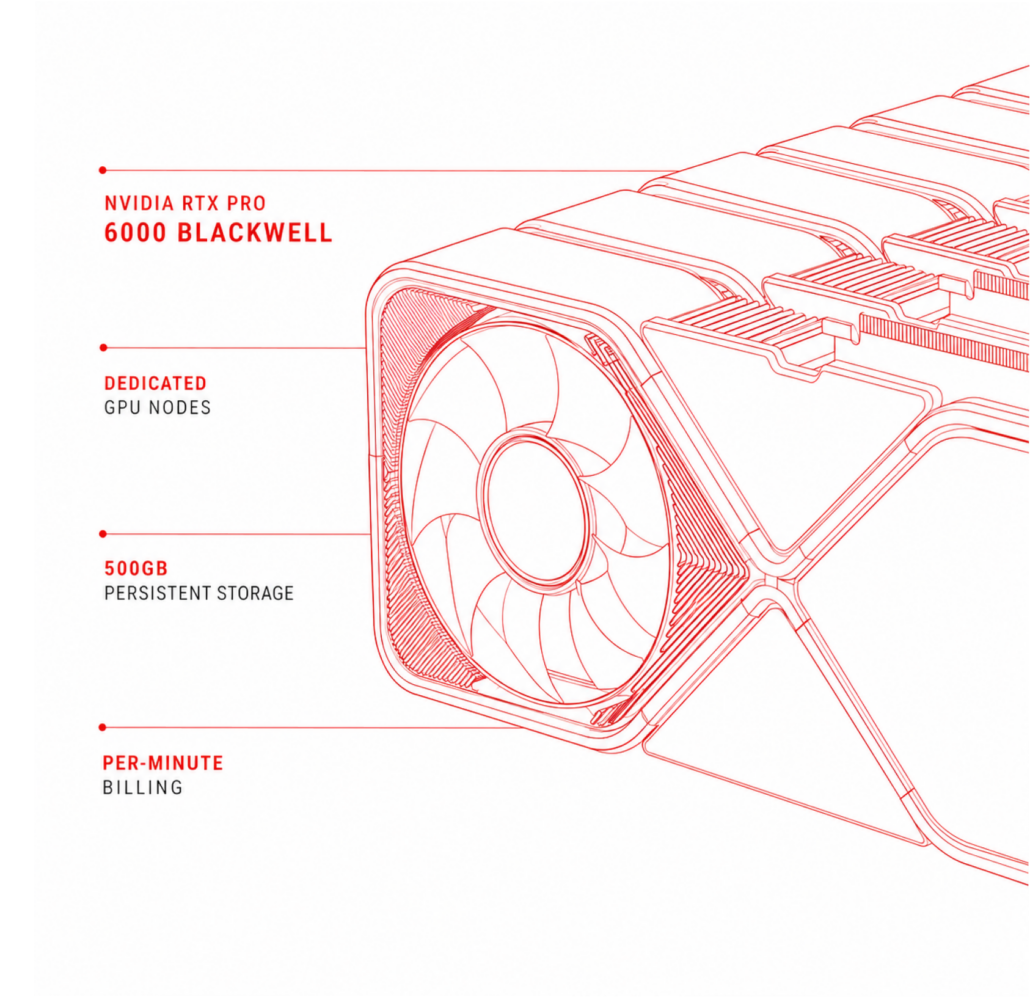
While researching GPU options for Ozen’s Hebrew speech recognition server, Arbel came across Xesktop, and found it to be a solution to his open-source accessibility project and its computing requirements. The service gave him access to rented GPU resources without having to purchase additional hardware, which came especially important as Ozen’s demanding computational work comes from developing, training, and benchmarking AI speech recognition models..
“Yes, training Ozen’s Hebrew Whisper model. My RTX 2080 Ti’s 11GB of VRAM and clock speed couldn’t handle the training jobs, so without Xesktop that work wouldn’t have happened at all.” – Arbel
The service did not replace the work of designing, implementing, or evaluating the models. Those decisions remained with Arbel. Instead, it provided the computing capacity needed to carry out part of that work. For an independent developer funding a free accessibility project out of pocket, the ability to access additional hardware without purchasing it outright was particularly valuable.
Looking ahead to more accessible technology
Arbel’s next goal is to bring Ozen to app stores and continue improving its Hebrew speech recognition capabilities. A particular focus will be fine-tuning the model to recognize a wider variety of voices and accents, helping the application become more reliable in everyday conversations. Throughout these improvements, he intends to preserve what makes Ozen accessible in the first place: free, private, on-device functionality that does not depend on an internet connection.
Beyond Ozen, Arbel hopes to continue developing accessibility tools that address practical challenges in people’s daily lives. He is optimistic about the role AI will play in making ambitious projects more achievable for independent developers.
“AI already lets a solo dev do what used to need a team. I think it stays positive for builders as long as the tools stay open and the fundamentals still matter.” – Arbel
For Arbel, advances in AI and access to more powerful computing resources create opportunities for individuals to build applications that once required larger development teams. However, he believes that the most important part of software development will remain unchanged, regardless of how sophisticated the tools become.
“Understanding the problem and the person you’re solving it for. Tools change; knowing what ‘good’ looks like for your user doesn’t.”
That perspective continues to guide his plans for Ozen and whatever he builds next. As AI tools become more capable, Arbel wants to use them to create technology that responds to real human needs, starting with making everyday conversations more accessible to Hebrew speakers who are hard of hearing.
To learn more about Arbel’s work and follow Ozen’s development, visit:
Ozen on GitHub: https://github.com/arbelonson-source/ozen